

A tour of the American utilities industry and eight independently verified companies — from Arlington to Rapid City — that keep power, gas, and infrastructure flowing.
Power You Don't Think About
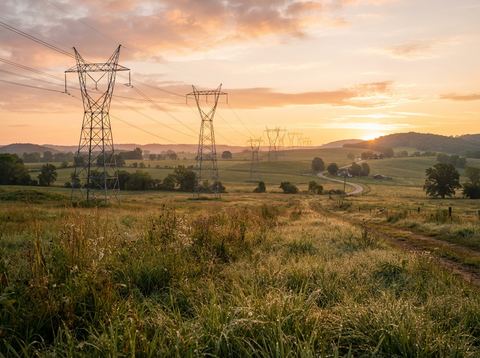
Flip a switch, turn a stove burner, or plug in a phone charger, and you're relying on a vast, mostly invisible machine. That machine is the American utilities industry — the pipelines, power plants, transmission lines, and compression stations that move electricity and natural gas from source to socket. It rarely makes headlines when it works, which is exactly the point.
What This Sector Actually Builds
Utilities companies are part of the broader Energy & Utilities sector, and their work spans generation, transmission, distribution, and the midstream infrastructure that connects wells and plants to homes and businesses. Some companies focus on delivering electricity to millions of customers; others move natural gas through pipeline networks or provide the compression and processing equipment that keeps gas flowing at pressure.
Regulated, but Regional
Many utilities operate as regulated monopolies within specific service territories, which is why so many of the companies below are named for the regions they serve — a structure that ties a company's fortunes closely to the economic health of its home turf.
Named for Their Territory
Alliant Energy Corp, headquartered in Madison, Wisconsin, and Ameren Corp, based in St. Louis, Missouri, both trade on their respective exchanges — NASDAQ: LNT and NYSE: AEE — and exemplify the regional utility model, delivering power to customers across their home states.

Black Hills Corp /SD/, based in Rapid City, South Dakota, and Atmos Energy Corp, headquartered in Dallas, Texas, round out this group of regionally rooted utilities, trading as NYSE: BKH and NYSE: ATO.
Moving Gas Through the Pipeline
Natural gas doesn't move itself. Antero Midstream Corp, based in Denver, Colorado, and Archrock, Inc., headquartered in Houston, Texas, represent the midstream side of the business — the pipelines, gathering systems, and compression infrastructure that sit between the wellhead and the end user. Both trade on the NYSE, as AM and AROC respectively.
Why Midstream Matters
Without this connective infrastructure, natural gas produced in one part of the country would have no reliable way to reach the furnaces, factories, and power plants that depend on it hundreds of miles away.
Diversified and Global Reach
Not every utility company confines itself to one region or one type of energy. AES Corp, based in Arlington, Virginia, and trading as NYSE: AES, reflects a more diversified approach to power generation and distribution. Brookfield Infrastructure Corp, headquartered in New York, New York, and trading as NYSE: BIPC, similarly operates with an infrastructure focus that extends beyond a single service territory.
Why Buyers and Investors Watch This Sector
Utilities are often called defensive investments because demand for electricity and gas doesn't disappear in a downturn — people still need to heat their homes and run their businesses. That steady demand, combined with regulated rates in many territories, makes the sector a bellwether for infrastructure spending and regional economic stability.
Tracking Origin and Support
For buyers who care about where their infrastructure dollars go, this directory highlights independently verified American utilities companies, comparing details like Made-in-USA origin, U.S.-based support and labor, and warranty terms — information that matters when the underlying assets are meant to last for decades.
A Sector Built to Last
From Madison to Houston, Rapid City to New York, these eight companies show how varied the American utilities landscape really is — regional electric providers, midstream gas movers, and diversified infrastructure operators alike. Together, they illustrate an industry that's less about flash and more about reliability, built to keep running long after the headlines move on.