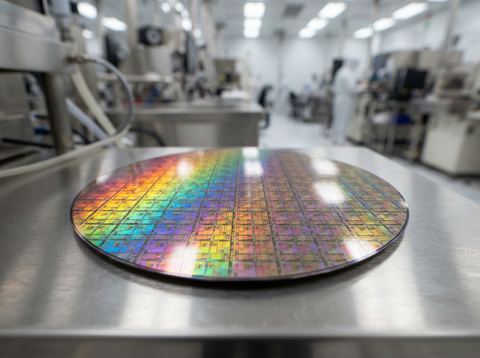


Founded in 1980, Lam Research holds the top global market share in etch equipment and reported $18.4 billion in FY2025 revenue, cementing its role in the chip supply chain.
The Invisible Hand in Every Chip
Every time a semiconductor gets made — whether it ends up in a smartphone, a data center server, or an electric vehicle — a machine built by Lam Research Corp probably had a hand in creating it. Founded in Fremont, California in 1980, Lam has spent more than four decades perfecting two critical steps in chip manufacturing: deposition, the process of building up layers on a silicon wafer, and etch, the precise selective removal of material from each layer. These are not glamorous processes. But without them, there are no chips.

What Lam's Machines Actually Do
Semiconductor fabrication happens at scales measured in nanometers — far smaller than anything the human eye can see. Lam holds the top market share in etch globally and the clear second share in deposition. Together, those two disciplines cover much of what it takes to transform a blank silicon wafer into a functioning chip. The company's customers include the largest chipmakers on earth: TSMC, Samsung, Intel, and Micron.
Deep Ties to Memory Chips
Lam is particularly concentrated in the memory chip segment, serving producers of DRAM and NAND chips — the components responsible for storing data in devices from smartphones to enterprise servers. That focus makes Lam's business closely tied to memory demand cycles, one of the more volatile corners of the semiconductor market.
More Than Four Decades in Business
Lam was founded in 1980 and went public on NASDAQ in May 1984. Today it trades under the ticker LRCX and employs approximately 20,600 people, with headquarters still in Fremont, California. That longevity in a technically demanding industry is itself a signal of how thoroughly Lam has woven itself into the global chipmaking supply chain.
Revenue That Keeps Growing
In FY2025, Lam recorded $18.4 billion in revenue — reflecting growth of 26% from FY2021 to FY2025. Sustained growth of that magnitude, in a sector requiring constant reinvestment and engineering innovation, speaks to Lam's position as a supplier that chipmakers depend on and cannot easily replace once a production line is running.
Margins That Impress for a Machine Builder
Lam posted a gross margin of 48.7% and a net margin of 29.1% in FY2025, producing $5.4 billion in net income. For a company making large industrial machines — not software subscriptions — those margins are striking. They reflect the engineering complexity of Lam's products and the pricing power that comes from holding dominant or near-dominant share in its core categories.
A Company Built to Scale
Lam holds $21.3 billion in total assets and carries a market capitalization of $379.3 billion. Its shares have recently traded near their 52-week high, and the company returns capital to shareholders through a dividend yielding approximately 0.25% annually. The stock's price-to-earnings ratio of 99.0 reflects how much of the market's valuation rests on expectations for future growth beyond today's already substantial earnings.
Why Lam's Work Matters
The global push to build more semiconductor manufacturing capacity — driven by artificial intelligence, cloud computing, and supply-chain resilience efforts alike — puts Lam's specialized equipment at the center of an enormous industrial undertaking. More chips require more machines to make them. And making those machines, at the precision the industry demands, is exactly what Lam Research has done for more than forty years.
This article is factual reporting drawn from public filings and market data; it is not investment advice.