

A snapshot of Applied Materials' business and financials, from its role supplying chipmakers to what its revenue, margins, and market value actually mean.
The Machines Behind the Chips
Every smartphone, car computer, and data center chip starts on a factory floor full of specialized machinery, and much of that machinery comes from one company. Applied Materials doesn't make chips itself — it makes the equipment that chipmakers use to build them.
What Applied Materials Actually Makes
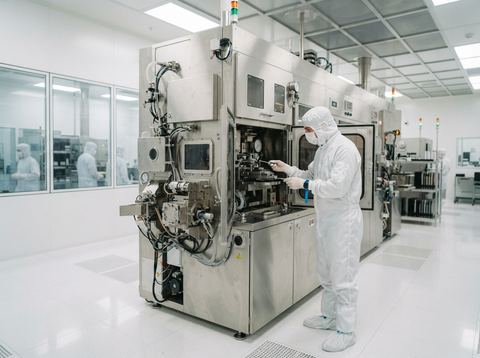
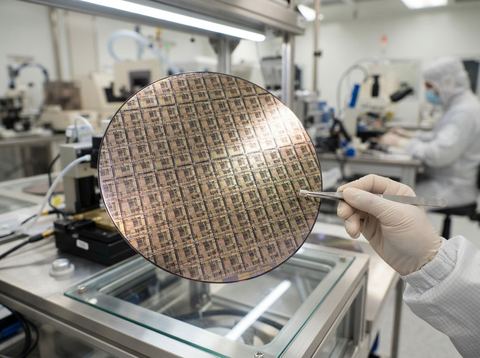
The company describes itself as the largest semiconductor wafer fabrication equipment manufacturer in the world, with a broad portfolio spanning nearly every corner of the wafer fabrication equipment ecosystem. That means its tools touch many of the steps needed to turn a blank silicon wafer into a working chip.
Deposition Leadership
Applied Materials holds leading market share in deposition, the process of layering new materials onto semiconductor wafers. It's more exposed to general-purpose logic chips made at integrated device manufacturers and foundries than to some other chip categories, and its customer list includes the largest chipmakers in the world — TSMC, Intel, and Samsung among them.
A Half-Century in Santa Clara
Headquartered in Santa Clara, California, Applied Materials has been a publicly traded company since its IPO in October 1972. Today it employs approximately 36,500 people and trades on the Nasdaq under the ticker AMAT.

Revenue and Profit, By the Numbers
In fiscal year 2025, Applied Materials generated $28.4 billion in revenue and $7.0 billion in net income. That means for every dollar of sales, roughly 25 cents flowed through to the bottom line as profit — a sign of a company with real earning power, not just top-line size.
Margins That Signal Pricing Power
The company's gross margin came in at 48.7%, meaning it keeps nearly half of every sales dollar after covering the direct cost of making its equipment. Its net margin of 24.7% shows that even after research, administration, and other expenses, a substantial share of revenue still becomes profit.
Growth Over Four Years
Revenue grew 23% from fiscal 2021 to fiscal 2025, a multi-year expansion that reflects sustained demand for semiconductor manufacturing tools rather than a single strong year. Applied Materials also reports total assets of $36.3 billion, giving a sense of the scale of the balance sheet behind its operations.
How the Market Values the Company
Applied Materials carries a market capitalization of $359.7 billion, reflecting how investors collectively value the entire company on the stock market. Its price-to-earnings ratio stands at 75.2, a figure that compares the company's stock price to its per-share earnings and is one way analysts gauge how the market is pricing a company's profits relative to its size.
A Modest Dividend
The company pays a dividend yielding about 0.33% annually. That's a modest cash return relative to the share price, meaning most of the value investors place on Applied Materials stems from the underlying business rather than dividend income.
Where Shares Stand Today
Shares recently traded at $650.91, sitting 10% below the stock's 52-week high. That gap simply shows where the current price falls relative to its recent peak, without implying any particular direction going forward.
The Bottom Line
Applied Materials is a large, profitable equipment supplier sitting at the center of the global semiconductor industry, with strong margins and a market value that reflects its scale. This article is factual reporting drawn from public filings and market data, not investment advice.