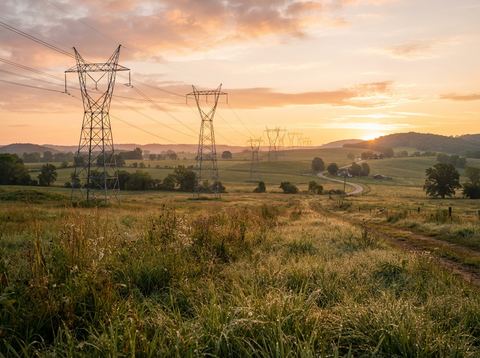


A look at eight directory-verified American utilities and energy infrastructure companies, from Wisconsin power providers to Texas gas distributors.
Keeping the Lights On
Few industries touch daily life as directly as utilities. Every time a light switch flips or a furnace kicks on, a chain of companies has already done the unseen work of generating, moving, and delivering energy. The American utilities sector, part of the broader Energy & Utilities world, is built on that quiet reliability.
What Utilities Actually Do
Utilities companies generate and distribute electricity and natural gas, and they build and maintain the infrastructure — pipelines, power plants, transmission lines — that carries energy from source to customer. Some focus on regulated electric and gas service to households and businesses; others specialize in the midstream systems that gather, compress, and move natural gas before it ever reaches a meter.
A Directory of Verified Operators
The directory currently features eight companies from this space, each independently verified for details like Made-in-USA origin, U.S. support and labor, and warranty terms. They range from long-established regional utilities to newer infrastructure specialists.

Regional Power Providers
Several of the listed companies serve specific American regions with electricity and gas. Alliant Energy Corp, based in Madison, Wisconsin, and Ameren Corp, headquartered in St. Louis, Missouri, are examples of utilities rooted in the Midwest. Black Hills Corp /SD/, based in Rapid City, South Dakota, represents the sector's presence in the Mountain West.
Texas and the Southwest
Texas shows up twice on this list. Atmos Energy Corp, based in Dallas, is a natural gas utility, while Archrock, Inc., headquartered in Houston, operates in the natural gas compression and midstream space. Together they illustrate how Texas has become a hub for both gas distribution and the equipment that keeps gas moving.
Midstream and Infrastructure Specialists
Not every utility company sells power directly to households. Antero Midstream Corp, based in Denver, Colorado, focuses on the gathering and processing systems that support natural gas production. Brookfield Infrastructure Corp, headquartered in New York, New York, is part of a broader infrastructure investment approach that spans utilities and related assets.
A National Footprint
AES Corp, based in Arlington, Virginia, rounds out the group as a large, geographically diverse energy company. Taken together, these eight companies span coasts, the Midwest, the Mountain West, and the Gulf Coast — a reminder that utility infrastructure is inherently local even when the companies operating it are large and publicly traded.
Why Domestic Buyers Pay Attention
Utilities are capital-intensive and long-lived; a transmission line or gas pipeline installed today may serve customers for decades. That long horizon is exactly why buyers, regulators, and communities track these companies closely — reliability, service quality, and where labor and materials come from all matter when the infrastructure in question is this permanent.
Publicly Traded, Publicly Accountable
Every company listed here trades on a major U.S. exchange — NYSE or NASDAQ — which means their operations are subject to public financial disclosure. AES trades as NYSE: AES, Alliant Energy as NASDAQ: LNT, and the rest carry their own tickers, from NYSE: AEE for Ameren to NYSE: BIPC for Brookfield Infrastructure.
A Sector Built on Fundamentals
Utilities rarely make headlines the way flashier industries do, but they underpin nearly everything else in the American economy. From Wisconsin substations to Houston compression stations, the companies in this directory represent the practical, often overlooked machinery that keeps homes warm, lights on, and businesses running.