

Founded in Boise in 1978, Micron Technology has grown into one of the world's largest semiconductor companies, posting $37.4B in revenue and $8.5B in net income in FY2025.
A Chip Company Born in Idaho
Micron Technology Inc doesn't make the processors that grab the headlines — it makes the memory that makes those processors useful. Founded in 1978 in Boise, Idaho, and publicly traded since June 1984, Micron has grown into one of the largest semiconductor companies on earth. Its product — memory and storage chips — underpins nearly every digital device in use today.

What Micron Actually Makes
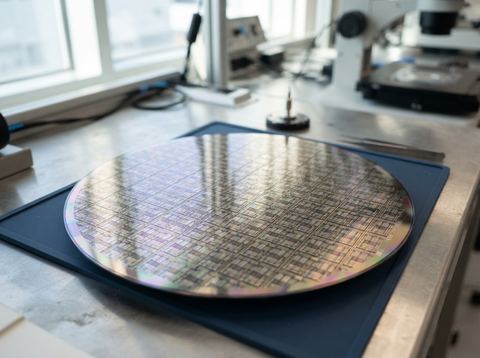
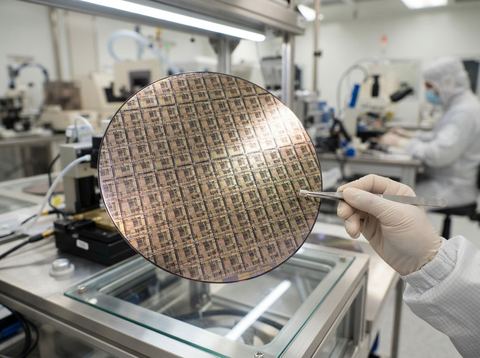
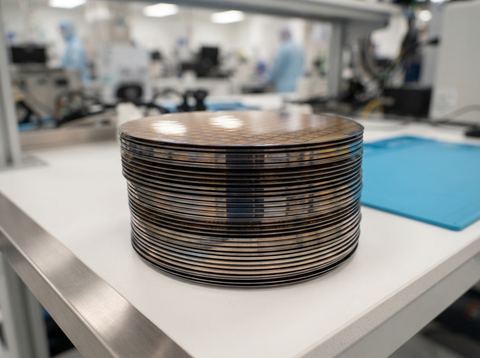
Micron's core business is DRAM (dynamic random access memory), the short-term working memory inside computers, smartphones, and servers. A secondary part of its business involves NAND flash chips — the kind that stores data more permanently in solid-state drives and mobile devices. Because memory chips are a commodity with cyclical pricing, being vertically integrated — designing and manufacturing its own chips — gives Micron a real cost edge.
Who Buys These Chips
Micron sells into a genuinely diverse customer base:
- Data centers — the biggest and fastest-growing segment, turbocharged by AI infrastructure spending
- Mobile phones — DRAM and NAND packed into every smartphone
- Consumer electronics — laptops, tablets, and gaming consoles
- Automotive and industrial — increasingly complex vehicles and factory systems
That breadth helps buffer the business against downturns in any single market.
The Revenue Picture
In FY2025, Micron generated $37.4 billion in revenue — a figure that underscores just how essential memory has become to the modern digital economy. Revenue grew 35% from FY2021 to FY2025, a span that included both a deep industry downturn and a powerful recovery. That long arc reflects the sustained pull from cloud computing, AI, and connected devices.
Margins Tell the Story
With a gross margin of 39.8% and a net margin of 22.8%, Micron converts a meaningful share of every revenue dollar into profit. Net income for FY2025 came in at $8.5 billion — a result that reflects the payoff of vertical integration and massive scale. Not every semiconductor cycle has been this favorable to memory makers, which makes these margins worth appreciating in context.
A Balance Sheet Built for Manufacturing
Micron's total assets stand at $82.8 billion, reflecting the staggering capital requirements of building and maintaining cutting-edge chip fabrication plants. Semiconductor manufacturing is among the most capital-intensive industries in existence, and that asset base tells the story plainly.
Market Standing and Valuation
Micron trades on the NASDAQ under the ticker MU, carrying a market capitalization of $974.4 billion. Its price-to-earnings ratio of 149.2 signals that the market is pricing in substantial future growth — particularly around AI-driven memory demand — well beyond current earnings. The company pays a small dividend, yielding approximately 0.05% annually, and shares have recently traded about 7% below their 52-week high.
Still Rooted in Boise
With approximately 53,000 employees worldwide, Micron remains headquartered in Boise, Idaho — a quiet reminder that world-class technology companies don't require a coastal address. From a regional startup nearly five decades ago to a global semiconductor force, the company has scaled dramatically without leaving its hometown behind.
This article is factual reporting drawn from public filings and market data, and is not investment advice.