
Founded in 1993 to build better graphics cards, NVIDIA now sits at the center of the artificial intelligence revolution with revenues and profits that few companies in history have matched.
A Santa Clara Company That Rewrote the Rules
NVIDIA began in 1993 in Santa Clara, California, with a straightforward ambition: make graphics processing units — GPUs — that could render richer, faster images on personal computers. The company went public on NASDAQ in January 1999, trading under the ticker NVDA. Three decades later, it occupies a position that almost no one anticipated: the essential hardware and software backbone of the global artificial intelligence boom.

What NVIDIA Actually Makes
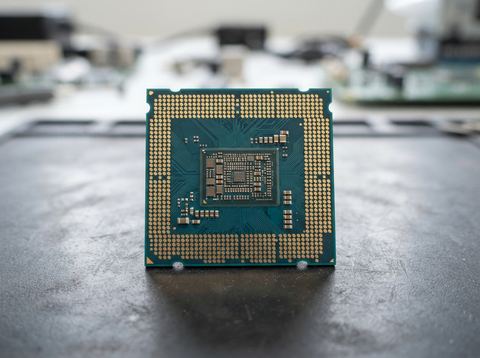
At its core, NVIDIA designs semiconductors. GPUs were originally built to handle the intense, parallel math required to generate realistic visuals in video games. That same architecture — thousands of small cores working simultaneously — turned out to be exactly what AI researchers needed to train massive machine-learning models.
Beyond the Chip
NVIDIA doesn't just sell hardware. Its CUDA software platform allows developers to write programs that run directly on NVIDIA GPUs, creating a tightly integrated ecosystem for AI model development and training. The company is also expanding into data center networking, building the interconnects that tie banks of GPUs together so they can tackle the enormous computational workloads modern AI demands.
Growth That Rewrites Expectations
The financial numbers attached to NVIDIA today are difficult to contextualize because very few companies have grown this fast at this scale. Revenue reached $215.9 billion in FY2026. To appreciate the velocity: that figure represents a 702% increase from FY2022, a span of just four fiscal years. That is not a rounding error or a typo — it is one of the steepest revenue climbs in the history of large-cap American industry.
Profitability at a Rare Altitude
Size alone does not tell the full story. What makes NVIDIA's position unusual is how much of its revenue it keeps as profit.
- Gross margin: 71.1% — meaning roughly seventy-one cents of every revenue dollar remains after the direct cost of producing its chips and software.
- Net margin: 55.6% — more than half of total revenue flows through to net income.
- Net income: $120.1 billion in FY2026.
For context, most manufacturers operate on single-digit net margins. NVIDIA's 55.6% net margin reflects the premium pricing power that comes from owning the dominant platform in a market with surging demand and few credible alternatives.
A Market Value in Rare Company
Investors have priced NVIDIA's future aggressively. Its market capitalization stands at $5.0 trillion, a figure that places it among the most valuable companies ever to trade on a public exchange. The stock carries a price-to-earnings ratio of 39.3, reflecting expectations of continued strong earnings. A recent share price of $192.53 sits about 18% below its 52-week high, a reminder that even dominant companies move through cycles of enthusiasm and recalibration.
NVIDIA also pays a dividend yielding approximately 0.52% annually — modest by income-investor standards, but notable for a growth-oriented technology company.
The People Behind the Platform
Approximately 42,000 employees support NVIDIA's global operations, a workforce that designs chips, writes software, builds customer relationships, and manages one of the most complex supply chains in the semiconductor industry.
Total Assets and Financial Foundation
NVIDIA reports total assets of $206.8 billion, underpinning its ability to invest in next-generation research, manufacturing partnerships, and infrastructure at a pace its competitors struggle to match.
What It All Means
NVIDIA's arc — from a gaming-graphics startup to the company whose chips power AI data centers worldwide — is a case study in how a focused technical bet, made early and executed consistently, can reshape an entire industry. Its financials are the arithmetic of that transformation.
This article is factual reporting drawn from public filings and market data; it is not investment advice.