
A plain-English look at NVIDIA's revenue, profit, and market value, using only verified figures from its latest filings and market data.
Thirty years ago, NVIDIA was known mainly to gamers who wanted smoother graphics on their PCs. Today, the same underlying technology — the graphics processing unit, or GPU — sits at the center of the artificial intelligence boom, and the company built around it has become one of the most valuable corporations in the world.

From Gaming Chips to AI Engines
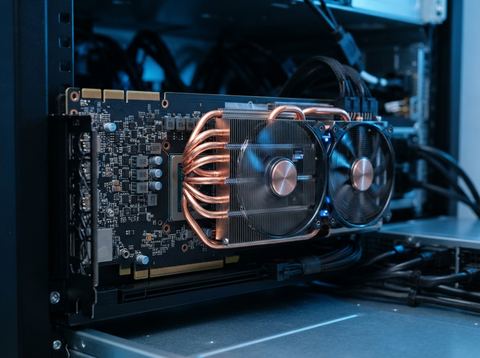
NVIDIA Corp, headquartered in Santa Clara, California, was founded in 1993 and went public in January 1999. Its chips were originally built to render video game graphics, but that same architecture turned out to be extremely good at the kind of parallel math needed to train and run large AI models.
The Software Side of the Business
NVIDIA's business is not just hardware. The company also runs Cuda, a software platform that developers use to build and train AI models on its GPUs. It is also expanding into data center networking, which helps link many GPUs together so they can handle large, complex AI workloads as a single system.
What the Revenue Numbers Show
In its most recent fiscal year, NVIDIA reported $215.9 billion in revenue. That is a massive jump from where the company stood a few years earlier — revenue grew 702% from fiscal year 2022 to fiscal year 2026, a pace that reflects how quickly demand for AI computing hardware has scaled.
Turning Sales Into Profit
Revenue alone doesn't tell the full story; what matters is how much of it becomes actual profit. NVIDIA's net income for the fiscal year was $120.1 billion, meaning more than half of every dollar in sales ultimately flowed through to the bottom line. That shows up in its net margin of 55.6%, alongside a gross margin of 71.1% — both unusually high figures for a hardware manufacturer.
Sizing Up the Balance Sheet
NVIDIA holds $206.8 billion in total assets, the resources the company has on its books to support operations, research, and future growth. Combined with its profitability, this gives a sense of a company that is not just growing fast but generating substantial cash as it does so.
Employees Behind the Scale
Despite its enormous financial footprint, NVIDIA runs with a relatively lean workforce of approximately 42,000 employees, a small headcount compared to the scale of revenue it produces.
How the Market Values NVIDIA
NVIDIA trades on the NASDAQ under the ticker NVDA, with a recent share price of $194.97 (15-minute delayed). That puts the company's market capitalization at $5.0 trillion, one of the largest valuations of any publicly traded company. The stock is currently trading 17% below its 52-week high, a reminder that even highly valued companies see their share prices move over time.
Reading the Valuation Ratios
NVIDIA carries a price-to-earnings ratio of 39.8, a figure investors use to compare a company's share price to its per-share earnings. The company also pays a dividend, though at a yield of about 0.51% annually, it is a modest one relative to the size of the business.
Where NVIDIA Sits Today
NVIDIA operates in the semiconductors industry, but its real significance today comes from sitting at the intersection of chips, software, and the infrastructure that powers modern AI systems. The financial figures — rapid revenue growth, high margins, and a multi-trillion-dollar market value — reflect a company whose products have become central to a major technological shift.
This article is factual reporting drawn from public filings and market data, not investment advice.