
Founded in 1969, AMD has grown into one of America's most valuable semiconductor companies, posting $34.6B in revenue and emerging as a serious force in AI chip design.
In January 1973, a young semiconductor firm in California stepped onto the public markets for the first time. More than fifty years later, Advanced Micro Devices stands at the center of one of the most consequential technology shifts of the modern era — the race to build chips powerful enough to run artificial intelligence. The story of how it got there is one of patient engineering, bold bets, and a market that finally caught up to its ambitions.

A Santa Clara Original
AMD makes its home in Santa Clara, California, a city synonymous with semiconductor innovation. Founded in 1969 and employing roughly 31,000 people today, the company is large enough to tackle computing's most demanding engineering challenges while staying focused on a single, high-stakes discipline: designing digital semiconductors for markets that span from consumer electronics to enterprise infrastructure.
What AMD Actually Builds
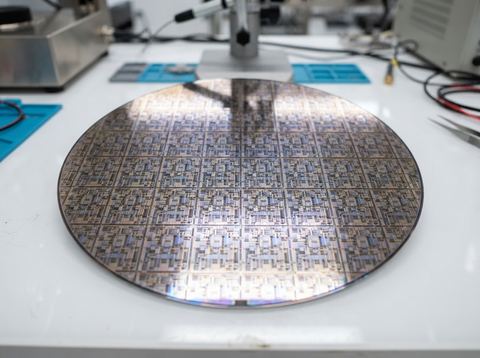
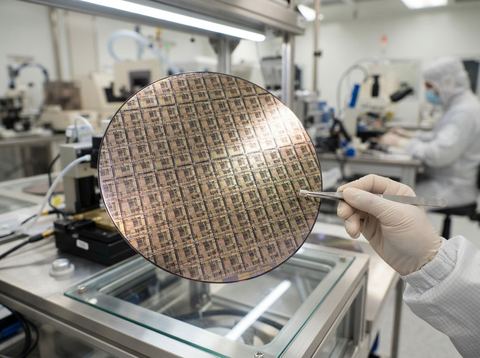
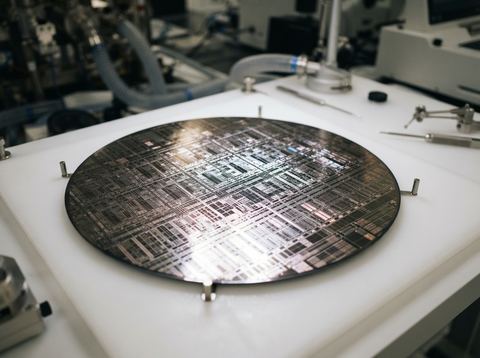
AMD's product catalog touches several critical markets. Its traditional strength lies in central processing units (CPUs) and graphics processing units (GPUs) used in personal computers and data centers. These are the chips that execute instructions, render images, and process the torrents of data that modern software demands around the clock.
The Console Connection
AMD's reach extends well beyond the office or server rack. The company supplies the processors powering two of the world's most popular gaming consoles — the Sony PlayStation and the Microsoft Xbox. Winning both of those design contracts placed AMD silicon inside millions of living rooms and underscored its ability to deliver high-performance graphics at genuine consumer scale.
Chasing the AI Opportunity
The bigger conversation around AMD today revolves around artificial intelligence. The company is emerging as a prominent player in AI GPUs and related hardware — components in intense demand as data centers race to build infrastructure capable of training and running large AI models. AMD's existing GPU expertise gives it a credible foundation in a market growing at a historic pace.
Revenue That More Than Doubled
The financial numbers reflect a company in forward motion. AMD recorded revenue of $34.6B in FY2025, representing 111% growth compared to FY2021 — meaning the company more than doubled its top line in just four years. In a capital-intensive industry where incremental gains are the norm, that kind of expansion is genuinely unusual.
Profitability at Scale
Growth has come with real earnings power. AMD posted net income of $4.3B in FY2025, producing a net margin of 12.5%. Its gross margin of 49.5% reflects the pricing discipline that comes with designing chips that customers urgently need. Total assets of $76.9B give the company balance sheet depth to fund next-generation research and development.
What the Market Is Pricing In
AMD trades on the NASDAQ under the ticker AMD, carrying a market capitalization of $760.5B. Its recent share price of $521.58 sits roughly 5% below its 52-week high. The price-to-earnings ratio of 196.8 runs well above typical industry norms — a clear signal that investors are not merely paying for today's profits but anticipating robust growth in the years ahead. That kind of valuation demands continued execution.
Five Decades and Still Moving
From a 1969 founding through a January 1973 IPO to its current standing as one of America's most valuable technology companies, AMD has navigated the full arc of the semiconductor era. It now designs chips for markets that barely existed when it was founded — AI data centers, cloud computing platforms, next-generation gaming consoles — while preserving the engineering rigor that has kept it competitive across more than fifty years of relentless change.
This article is factual reporting drawn from public filings and market data, and is not investment advice.