
A plain-English look at Advanced Micro Devices' revenue, profit, and market value as it pushes deeper into AI hardware.
Few American companies have reinvented themselves as thoroughly as Advanced Micro Devices. Founded in 1969 and headquartered in Santa Clara, California, the chipmaker built its early reputation on central processing units and graphics chips for personal computers. Today it's chasing a different frontier: the artificial intelligence boom reshaping data centers around the world.
From PCs to AI Hardware
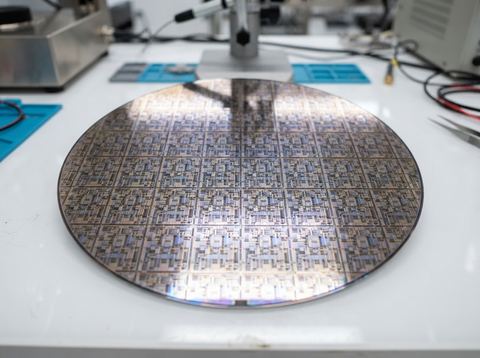
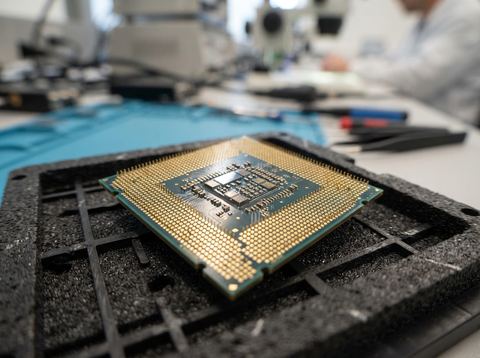
AMD's traditional strength has always been CPUs and GPUs for PCs and data centers. That foundation hasn't disappeared — it's simply been joined by a newer ambition. The company is emerging as a serious competitor in AI GPUs and related hardware, the specialized chips that power machine learning workloads.
Chips in Your Living Room
Beyond office desktops and server racks, AMD's silicon shows up somewhere more familiar to most people: gaming. The firm supplies chips found in prominent consoles like the Sony PlayStation and Microsoft Xbox, a business line that quietly reaches millions of households.
What the Revenue Numbers Show
In fiscal year 2025, AMD reported revenue of $34.6 billion. That figure matters most in context: revenue has grown 111% from FY2021 to FY2025, meaning the company has more than doubled in size over four years. Growth at that scale, sustained over multiple years, is a meaningful signal for a company operating in the notoriously competitive semiconductor industry.

Profitability in Plain Terms
AMD is profitable, posting net income of $4.3 billion in FY2025. To put that in perspective, its gross margin sits at 49.5%, meaning roughly half of every dollar in revenue remains after accounting for the direct costs of producing its chips. After all other expenses, the company's net margin comes in at 12.5% — a measure of how much of each revenue dollar ultimately becomes profit.
Balance Sheet Basics
AMD's total assets stand at $76.9 billion. That figure represents everything the company owns — cash, equipment, intellectual property, and more — and gives a sense of the scale of the operation supporting its semiconductor business.
How the Market Values AMD
AMD trades on the NASDAQ exchange under the ticker AMD, with a recent share price of $557.89 (15-minute delayed quote). Multiplying that price across all outstanding shares gives the company a market capitalization of $760.5 billion — a figure that reflects what investors collectively believe the entire company is worth at this moment.
A Notably High Valuation Multiple
One figure stands out for readers trying to understand how the market currently prices AMD's earnings: a price-to-earnings ratio of 210.5. That's a measure of how much investors are paying for each dollar of the company's annual profit, and it's a considerably higher multiple than many established industrial or consumer companies carry.
Where the Stock Sits Today
AMD is currently trading 4% below its 52-week high, suggesting the stock has stayed close to its recent peak rather than falling sharply from it. That's simply a snapshot of where the price sits relative to its own recent range, not a judgment about where it might go next.
The Workforce Behind the Chips
Designing digital semiconductors at this scale takes people. AMD employs approximately 31,000 workers across its operations, supporting everything from chip design to the corporate functions that keep a global semiconductor company running.
A Company Built on Reinvention
AMD's story since its IPO in January 1973 has been one of adaptation — from early PC chips to gaming consoles to today's AI-driven data centers. The company's own description captures that range: a semiconductor firm spanning PCs, gaming, data centers, industrial, and automotive markets, now leaning hard into AI GPUs as its next chapter.
This article is factual reporting drawn from public filings and market data, and is not investment advice.