Crude oil jumped nearly 8% on July 13 after Iran moved to block the Strait of Hormuz following a fresh round of U.S. airstrikes, reigniting fears that a…
Crude oil jumped nearly 8% on July 13 after Iran moved to block the Strait of Hormuz following a fresh round of U.S. airstrikes, reigniting fears that a key artery for the world's oil supply could stay clogged for weeks. Brent crude climbed to $82.03 and West Texas Intermediate rose to $77.10 as traders scrambled to price in the risk. Since there is no ETF that tracks Brent or WTI directly, the closest public proxy, USO, mirrors the same upward pressure investors are watching in crude markets right now.
At a Glance
- Brent crude rose to $82.03, WTI to $77.10, both up roughly 8% in one session
- Iran's Revolutionary Guard closed the Strait after the U.S. struck more than 80 targets over July 12 and 13
- President Trump announced a U.S. naval blockade and a 20% toll on cargo moving through the Strait
- Ship traffic fell to six vessels in 12 hours on July 11, down from 18 to 22 a day before the fighting resumed
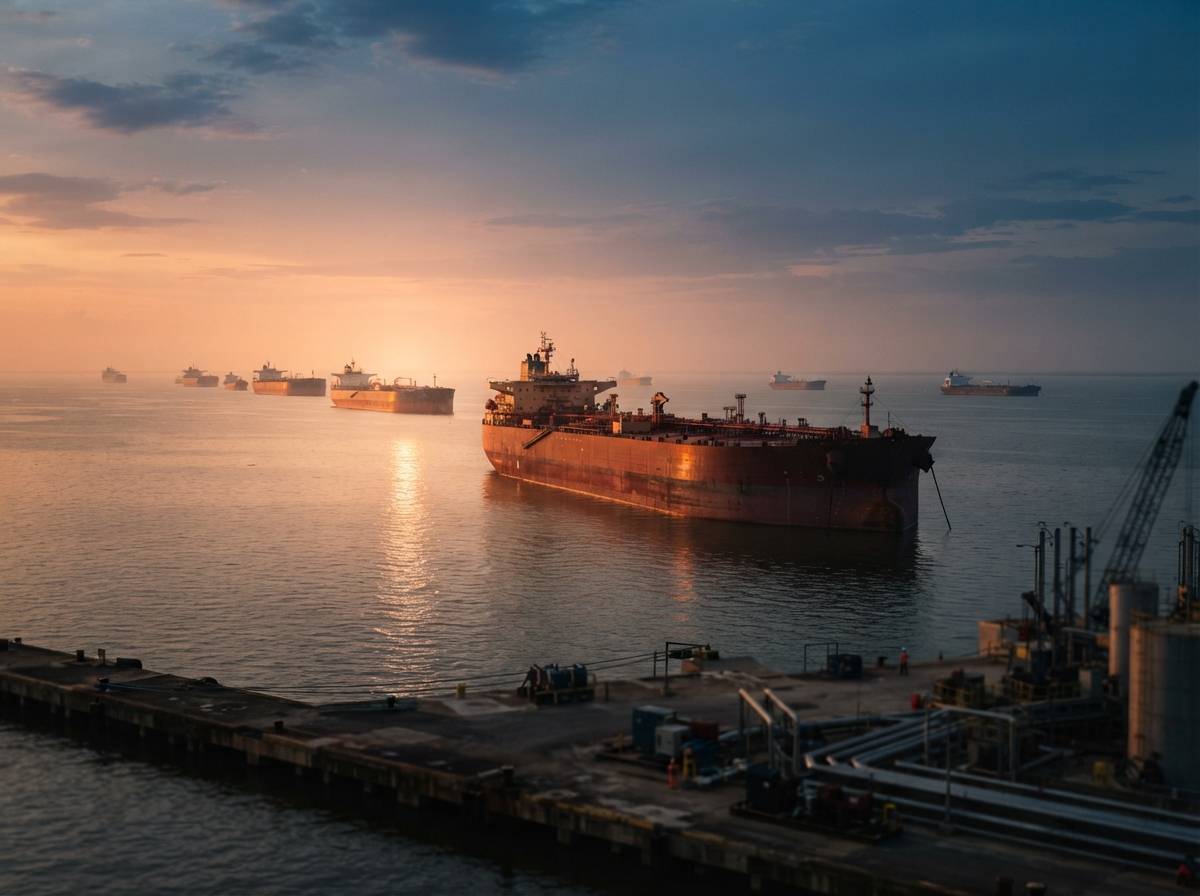
- About 230 loaded oil tankers are stuck in the Gulf with no clear path to deliver cargo
Iran blocking the Strait of Hormuz upends a fragile ceasefire
The truce reached on June 17 between Washington and Tehran barely lasted a month. U.S. forces struck more than 80 targets inside Iran over the July 12 and 13 weekend, and Iran's Revolutionary Guard answered by shutting the Strait again. Within hours, President Trump posted on Truth Social that the United States was reinstating a naval blockade, this one aimed specifically at Iranian vessels and buyers rather than at the waterway itself.
He described the new posture as