Tesla stock fell despite beating Q2 delivery forecasts. See how gas prices, Rivian's surge and valuation concerns are shaping the EV market.
Tesla makes electric vehicles, energy storage systems and, increasingly, the software and hardware behind autonomous driving and robotics. The company's stock swung sharply this week after it reported second quarter deliveries that beat Wall Street's forecasts, a surprise that traders are now trying to square with high gas prices, geopolitical tension and a shifting story about what Tesla actually is.
At a Glance
- Tesla delivered more than 480,000 vehicles in the second quarter, topping analyst estimates
- Tesla shares fell more than 6% in early Thursday trading despite the strong delivery number
- Rivian beat its own delivery projections and raised full year guidance, with its stock up 11%
- Average gas prices near $3.80 a gallon may have pushed some buyers toward EVs
- Tesla stock rose about 13% in the second quarter but remains negative for the year
Deliveries Beat, Shares Drop Anyway
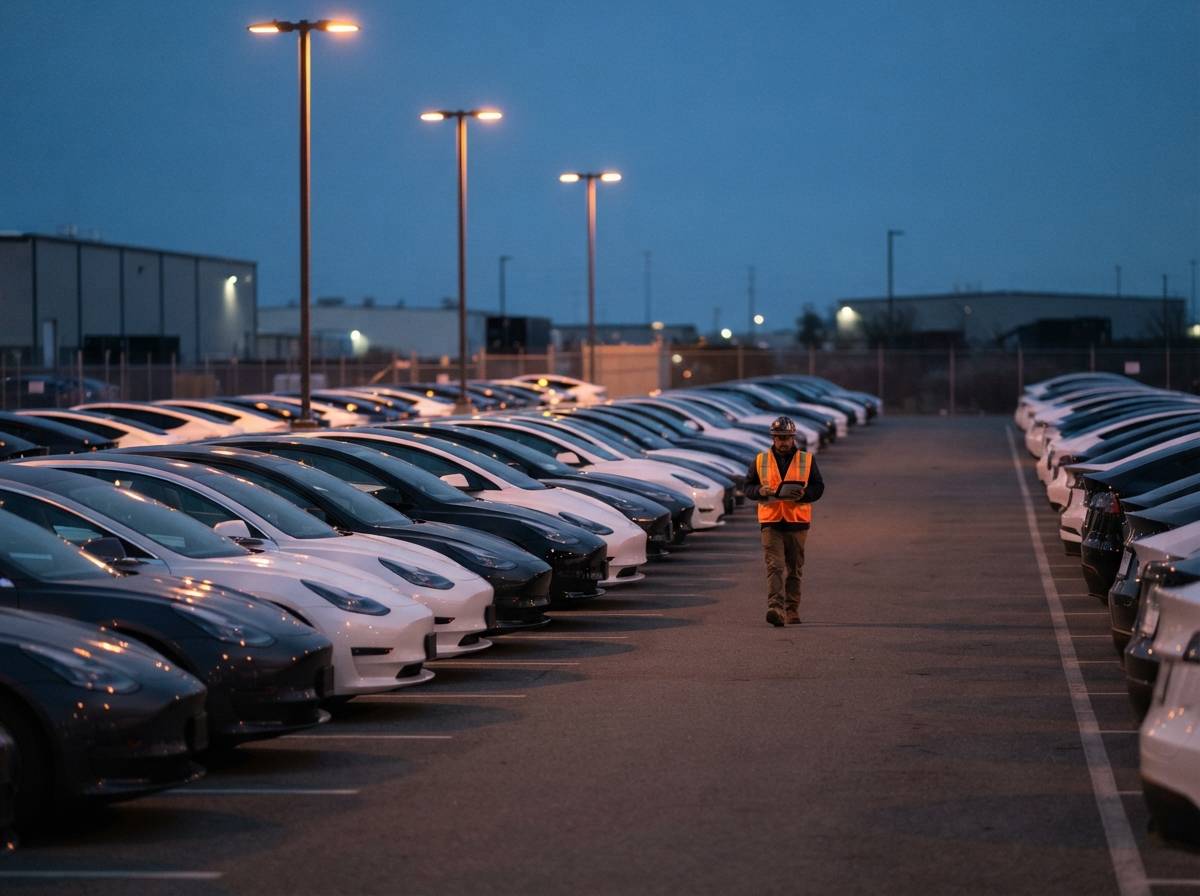
Tesla told investors Thursday morning that it delivered upward of 480,000 vehicles in the second quarter, a figure that cleared both the Visible Alpha consensus of Wall Street analysts and the company's own compiled average. On paper, that looks like good news. The market reaction said otherwise: Tesla shares dropped more than 6% shortly after the news broke, even as the delivery beat gave bulls a fresh talking point.
Rivian told a different story with similar numbers. The smaller EV maker also topped its own second quarter delivery projections and used the results to raise full year guidance. Investors rewarded that outcome directly, sending Rivian shares up roughly 11% in early trading.
Analysts see a possible link between the delivery strength and the price of gasoline. Regular unleaded recently averaged a bit above $3.80 a gallon, according to AAA data, a level that is down from a month earlier but still well ahead of year earlier prices. The run up traces partly to the U.S. Iran conflict, which pushed fuel costs higher and may have nudged some shoppers toward electric alternatives. Not everyone is convinced that story holds. Cox Automotive said last month that the new vehicle market appeared largely undisturbed by the current mix of economic and policy uncertainty, suggesting gas prices alone may not explain the delivery surge.
What the Numbers Say
Tesla's stock performance over the first half of the year has been choppy relative to the broader market. Shares climbed about 13% during the second quarter, a gain that still lagged the S&P 500 over that stretch. Zoom out to the full six months and the picture flips: Tesla is down for the year while the S&P 500 has added nearly 10%. The Magnificent Seven group, which counts Tesla as a member, pulled back overall during the same period, a sign that some of the enthusiasm behind the Big Tech rally has cooled.
Reading Tesla purely as a car company misses part of the current debate. Momentum indicators like RSI matter here because the stock has been volatile enough that traders watch for overbought or oversold signals around news events like delivery reports. Valuation remains a sticking point for skeptics, since Tesla has long traded at a premium built on expectations for businesses beyond vehicle sales. The company does not pay a dividend, so income minded investors get no cushion from yield while they wait to see how the growth story plays out.
The bull case rests on CEO Elon Musk's push to reposition Tesla around autonomous vehicles, artificial intelligence and robotics rather than car sales alone. Some market watchers go further, framing Tesla's long term relevance as tied to SpaceX, which Musk took public last month and which now ranks among the world's most valuable companies alongside Tesla itself. The bear case is more grounded in the present: deliveries beat estimates, yet the stock fell anyway, which suggests investors are weighing risks around margins, competition and the pace of the newer businesses rather than celebrating a single quarter's shipment numbers.
Frequently Asked Questions
Why did Tesla stock fall after beating delivery estimates?
The report topped Wall Street forecasts, but shares still dropped more than 6%, indicating investors were focused on other concerns such as margins, competition or the broader EV demand outlook rather than the delivery beat alone.
Did high gas prices drive the EV delivery gains?
It is a plausible factor given gas prices near $3.80 a gallon, but Cox Automotive noted the new vehicle market has generally seemed unaffected by recent economic and policy uncertainty, so the link is not confirmed.
How did Rivian's results compare to Tesla's?
Rivian also beat its own second quarter delivery projections and raised full year guidance, and its stock jumped about 11%, a stronger positive reaction than Tesla received despite both companies posting upside surprises.
What is driving the narrative shift around Tesla's business?
Elon Musk has encouraged investors to view Tesla less as a traditional EV maker and more as a company built around autonomous vehicles, artificial intelligence and robotics, with some observers also tying its future to SpaceX.
Where the Story Goes From Here
The gap between Tesla's delivery beat and its stock decline captures the tension investors face heading into the back half of the year. Vehicle numbers alone are no longer enough to move sentiment decisively in either direction, and the market seems to be waiting for clearer signals on Tesla's newer ventures before settling on a verdict.