USMCA renewal stalls as the U.S. demands changes, triggering annual reviews with Mexico and Canada despite record $1.58 trillion in trade.
The United States has refused to renew the USMCA in its current form, a move announced Wednesday that keeps the trade pact alive but forces Mexico and Canada into a fresh round of annual negotiations rather than locking in another 16 year term.
At a Glance
- The U.S. declined to renew USMCA following the first mandatory joint review, six years after the deal took effect.
- USMCA stays in force while the three countries hold annual reviews until a deal is reached or it expires in 2036.
- U.S. Mexico trade hit a record $872.83 billion in 2025; U.S. Canada trade reached $712.76 billion.
- Combined trade between the U.S. and its two neighbors topped $1.58 trillion for the year.
- Bilateral talks between the U.S. and Mexico are set to resume the week of July 20.
Why Washington Balked at a Straight Renewal
The decision followed the first joint review required under USMCA's sunset clause, a mechanism built into the pact that forces the three governments to reassess the agreement periodically rather than let it run on autopilot. July 1 was the deadline for Washington, Mexico City and Ottawa to decide whether to extend the deal for another 16 years. The U.S. said no.
"The United States did not agree to renew the USMCA in its current form. As a result, the USMCA is not renewed," U.S. Trade Representative Jamieson Greer's office said in a statement. Greer added that Washington intends to keep talking with both neighbors about what he called the agreement's shortcomings, along with U.S. trade deficits with the two countries.
What Happens Now
Rather than expiring or collapsing, USMCA remains legally in force. But the failure to agree on a straight renewal triggers a new obligation: annual reviews among the three countries until they either resolve their disagreements or the agreement reaches its scheduled expiration in 2036.
Bilateral talks between American and Mexican negotiators are scheduled to pick back up during the week of July 20, giving an early indication of how contentious this next phase might become.
The Trade Numbers Behind the Standoff
The timing is notable given how much commerce now flows through the agreement. Two way trade between the U.S. and Mexico hit a record $872.83 billion in 2025, cementing Mexico's status as America's largest trading partner. Canada wasn't far behind, with $712.76 billion in two way trade, making it the second largest partner. Together, the two countries accounted for more than $1.58 trillion in U.S. trade over the year.
| Trading Partner | 2025 Two Way Trade | Rank |
|---|---|---|
| Mexico | $872.83 billion | 1st largest U.S. trading partner |
| Canada | $712.76 billion | 2nd largest U.S. trading partner |
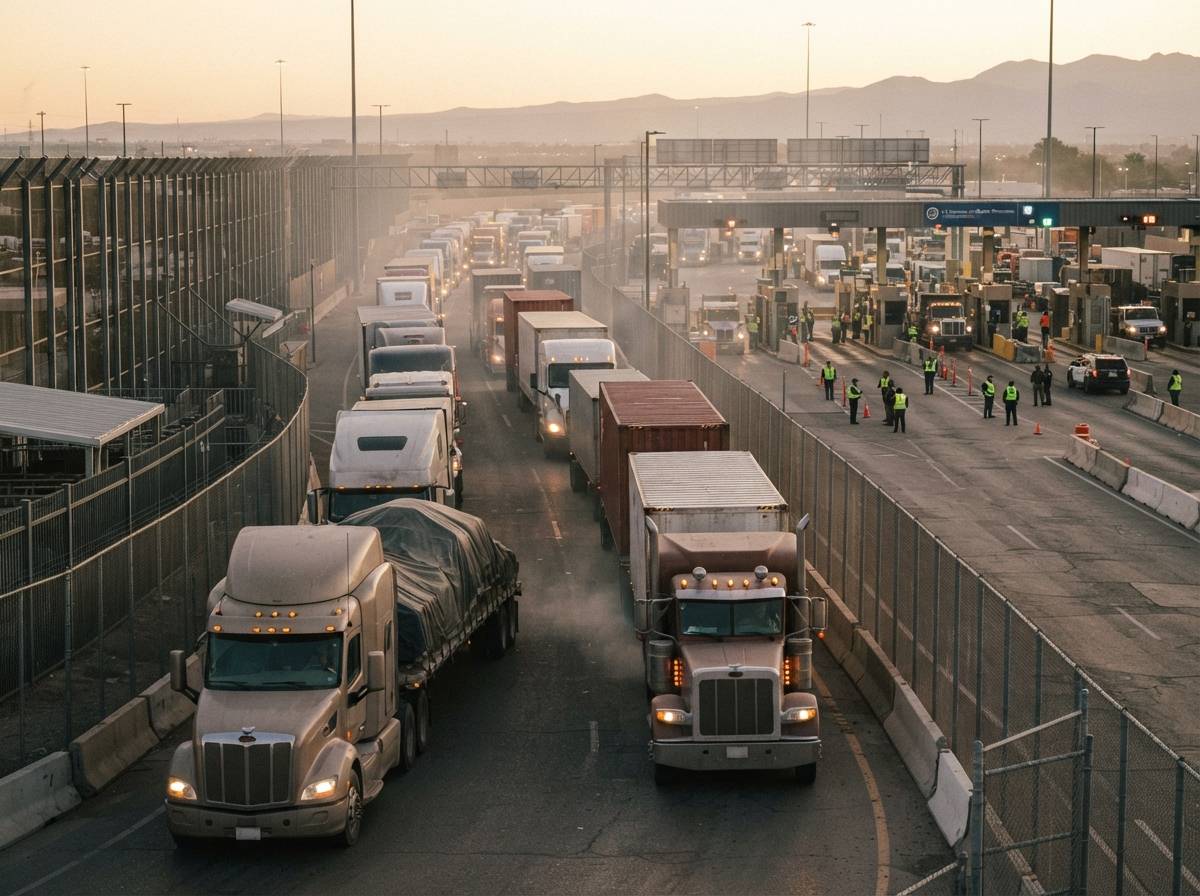
That volume touches nearly every corner of the North American economy, from manufacturers and retailers to automakers, farmers and logistics companies. For the trucking industry specifically, USMCA governs freight worth hundreds of billions of dollars that crosses the border each year through hubs like Laredo, Texas, Detroit Windsor, Buffalo Niagara and Otay Mesa, California.
A Pact Built to Be Revisited
USMCA replaced NAFTA in 2020 and was designed from the start with this kind of checkpoint in mind. The sunset provision requires the three nations to formally evaluate the agreement six years in, which is exactly what triggered this week's announcement. Instead of a clean up or down renewal, the countries are now locked into yearly check ins aimed at either fixing the disputes or letting the clock run toward the 2036 expiration.
Frequently Asked Questions
Does USMCA still apply to trade right now?
Yes. The agreement remains in force even though the U.S. declined to renew it in its current form. Tariff and trade rules under USMCA continue to apply while negotiations proceed.
When does USMCA actually expire?
The agreement is set to expire in 2036 unless the U.S., Mexico and Canada reach a new agreement before then through the annual review process now underway.
What is the USMCA sunset provision?
It's a built in requirement that forces the three member countries to formally review the agreement, starting six years after it took effect, to decide whether to renew it for another 16 years.
Which industries are most affected by the standoff?
Manufacturing, agriculture, automaking, retail and logistics all rely heavily on USMCA trade rules, and the trucking industry in particular depends on the pact to move freight through major border crossings.
What to Watch Next
With bilateral talks between the U.S. and Mexico resuming the week of July 20, the coming weeks should offer the first real signal of how far apart the three countries are on fixing what Greer called the agreement's shortcomings. Given the record trade volumes at stake, businesses on all sides of the border have strong incentive to see the annual review process produce answers well before 2036.