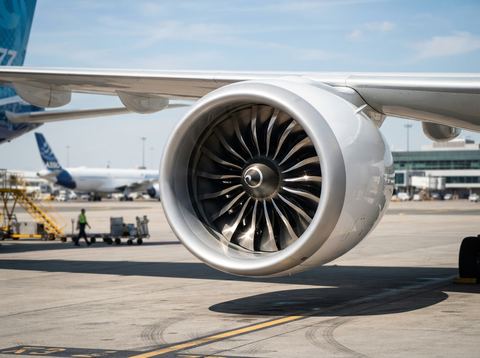


A plain-English look at Honeywell's revenue, profits, and market value, and what the century-old industrial company actually does today.
Long before it made jet engines and warehouse robots, Honeywell was a thermostat company. In 1885, Albert Butz founded Butz Thermo-Electric Regulator, a firm that produced an early version of the device now bolted to millions of American walls. That small beginning has grown into Honeywell International, a company whose reach now touches airplanes, factories, and buildings across the globe.
From Thermostats to Autopilots
Honeywell's inventive streak didn't stop at heating controls. Over the decades the company also developed biodegradable detergent and autopilot technology, two products that show how far its engineering has wandered from its original thermostat business.
Four Segments, One Company
Today Honeywell organizes itself around four business segments: aerospace technologies, industrial automation, energy and sustainability solutions, and building automation. That structure reflects a deliberate shift, as the company has recently made portfolio changes aimed at focusing on fewer end markets and aligning with a set of secular trends.
Where Honeywell Sits Today
Headquartered in Charlotte, North Carolina, Honeywell now employs approximately 101,000 people and trades publicly on the Nasdaq under the ticker HON. It's classified within the Aircraft & Components industry, a nod to the aerospace work that runs through much of its business. The company describes itself as a global multi-industry player with one of the largest installed bases of equipment anywhere.

Reading the Revenue
In its most recent fiscal year, Honeywell reported revenue of $37.4 billion. That figure places it firmly among the largest industrial companies in the country, reflecting a business built on selling equipment, systems, and services across aviation, manufacturing, and building operations. Revenue has grown 15% from FY2020 to FY2025, a steady climb rather than an explosive one.
What the Margins Show
Honeywell posted a gross margin of 36.9% and a net margin of 12.7%. In simple terms, for every dollar of sales, roughly 37 cents remained after the direct costs of producing goods and services, and about 13 cents ultimately became profit after all other expenses. Those numbers point to a company that keeps meaningful profitability even while operating at large scale.
Profit and the Bottom Line
Honeywell finished the year profitable, with net income of $4.7 billion. Combined with total assets of $73.7 billion, the figures describe a company with substantial resources and a business that consistently converts sales into earnings rather than losses.
How the Market Values It
Honeywell currently carries a market capitalization of $135.6 billion, with shares recently trading at $226.42. That price sits 9% below the stock's 52-week high, giving a sense of where current trading stands relative to its recent range. The stock's price-to-earnings ratio of 30.8 reflects how the market is pricing Honeywell's earnings relative to its share price.
Dividend and Investor Signals
Honeywell also pays a dividend, yielding about 2.1% annually. For income-focused shareholders, that payout is one more data point in how the company returns value alongside its share price movements. Since its IPO in September 1929, Honeywell has weathered nearly a century of market cycles while continuing to pay out to shareholders.
The Bigger Picture
Taken together, these figures describe a mature, profitable industrial company with steady rather than rapid growth, solid margins, and a significant footprint in aerospace, automation, and building technology. This article is factual reporting drawn from public filings and market data, not investment advice.