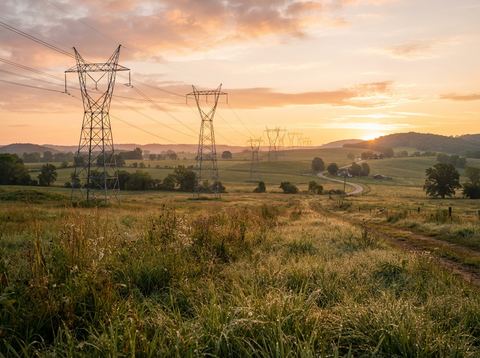


A look at the American utilities industry and eight independently verified companies, from Arlington to Rapid City, that deliver the power and fuel the country runs on.
The Grid Behind Everyday Life
Flip a switch, turn a stove dial, or plug in a car, and you're relying on a chain of companies most people never think about. The utilities sector — part of the broader Energy & Utilities world — is built on infrastructure that has to work every single day, in every season, without excuse.
Why This Sector Gets Watched Closely
Utilities are unusual among American industries because their customers rarely have a choice of provider. That makes independent verification of who these companies are, where they're based, and how they operate especially valuable for anyone doing due diligence — whether that's a homeowner, a business, or an investor comparing Made-in-USA origin, U.S. support and labor, and warranty practices across the field.
A Sector With Many Moving Parts
Utilities isn't a single business — it's a collection of related but distinct jobs: generating and delivering electricity, moving natural gas, and operating the midstream pipelines and compression equipment that connect wells to homes and factories. The eight companies featured here, all verified in the directory, represent different corners of that system.
Electric Power, Coast to Coast
AES Corp, headquartered in Arlington, Virginia, and trading on the NYSE under AES, sits in the electric power space. So does Alliant Energy Corp, based in Madison, Wisconsin, and listed on the NASDAQ as LNT. Further west, Black Hills Corp /SD/ operates out of Rapid City, South Dakota, trading on the NYSE as BKH.

The Midwest Utility Backbone
St. Louis, Missouri is home to Ameren Corp, which trades on the NYSE under the ticker AEE. Companies like this anchor the regional utility landscape that much of the American Midwest depends on for consistent electric service.
Natural Gas Delivery
Gas utilities are their own specialty within the sector, focused on the distribution networks that bring natural gas into homes and businesses. Atmos Energy Corp, based in Dallas, Texas, trades on the NYSE as ATO and represents this part of the industry.
Midstream: The Connective Tissue
Before gas or oil ever reaches a utility customer, it typically passes through midstream infrastructure — the pipelines, gathering systems, and compression stations that move raw energy from production sites to market. Antero Midstream Corp, headquartered in Denver, Colorado, trades on the NYSE under AM.
Compression and Infrastructure Services
Archrock, Inc., based in Houston, Texas, and trading on the NYSE as AROC, is another example of a company built around this kind of infrastructure work, a reminder that utilities aren't only about the final delivery to a customer's meter but also everything that happens upstream to make that delivery possible.
Infrastructure Investment at Scale
Some companies in this space take a broader view, holding stakes across infrastructure categories rather than operating a single utility type. Brookfield Infrastructure Corp, headquartered in New York, New York, trades on the NYSE under BIPC and illustrates this more diversified approach to infrastructure ownership.
What Ties It All Together
From Arlington to Denver to Rapid City, these eight companies show how spread out — and how essential — the utilities sector really is. Whether a company generates electricity, distributes natural gas, or moves energy through midstream pipelines, each plays a role in a system Americans rely on without a second thought. That's exactly why independent verification of these companies matters: the infrastructure is invisible until it isn't, and knowing who stands behind it is worth the extra look.