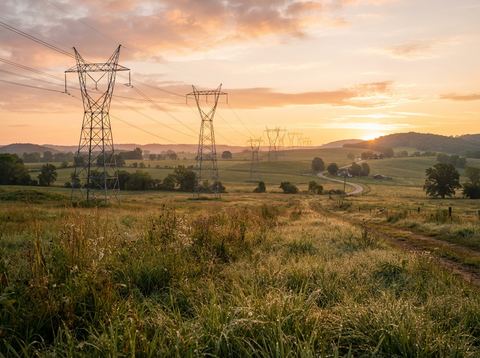


A look at the American utilities industry and eight verified companies—from electric and gas providers to midstream infrastructure firms—that keep power, heat, and energy flowing.
The Grid Behind Everyday Life
Flip a switch, turn a stove dial, or plug in a car, and somewhere a utility company is quietly doing its job. The Utilities industry, part of the broader Energy & Utilities sector, is the infrastructure layer most Americans never think about until it stops working. It includes the electric providers, natural gas distributors, and energy infrastructure firms that move power and fuel from source to socket.
Why This Sector Matters
Utilities are capital-intensive, regulated, and geographically rooted—each company typically serves a defined region or customer base. That makes the sector a useful lens for understanding regional economic health, infrastructure investment, and the reliability of essential services that homes and businesses depend on daily.
What These Companies Actually Do
The directory's utilities listings span a range of business models. Some are traditional regulated electric and gas utilities; others operate the pipelines, compressors, and midstream assets that move energy between producers and end users.
Electric and Gas Providers
Alliant Energy Corp, based in Madison, Wisconsin, and Ameren Corp, headquartered in St. Louis, Missouri, represent the regulated utility model—delivering electricity and gas to homes and businesses across their service territories. Atmos Energy Corp, based in Dallas, Texas, focuses on natural gas distribution, while Black Hills Corp /SD/, out of Rapid City, South Dakota, serves customers across the northern Plains and Rockies region.
Midstream and Infrastructure Specialists
Other companies in the directory operate further up the energy supply chain. Antero Midstream Corp, based in Denver, Colorado, and Archrock, Inc., headquartered in Houston, Texas, provide the gathering, compression, and processing infrastructure that connects natural gas production to broader distribution networks.
A National and Global Footprint
Not every company in this space is purely domestic in structure. AES Corp, based in Arlington, Virginia, and Brookfield Infrastructure Corp, headquartered in New York, New York, illustrate how utility and infrastructure ownership can extend across broader portfolios while still maintaining a significant American operational base.
Publicly Traded and Transparent
All eight companies featured here trade on major U.S. exchanges—AES on the NYSE under AES, Alliant Energy on NASDAQ as LNT, and the rest on the NYSE under their respective tickers: AEE, AM, AROC, ATO, BKH, and BIPC. That public listing status means financial disclosures, regulatory filings, and shareholder reporting are part of how these companies operate.
Why Buyers and Ratepayers Pay Attention
Unlike many consumer product categories, utilities customers rarely choose their provider outright—service territory usually decides that. But that doesn't mean scrutiny doesn't matter. Reliability, service quality, and long-term infrastructure investment all affect the communities these companies serve.
Made-in-USA and Domestic Support Matter Here Too
This directory evaluates American Utilities companies with the same lens applied elsewhere: independently verified information on U.S. origin, domestic labor and support, and warranty terms where applicable. For an industry built on physical infrastructure—wires, pipelines, compressors, and plants—knowing who operates that infrastructure and where it's based carries real weight.
The Bigger Picture
From regulated electric utilities in Wisconsin and Missouri to midstream gas infrastructure in Colorado and Texas, the companies profiled here show the range within a single industry label. Each plays a distinct role in the pipeline—sometimes literally—that keeps American homes powered and heated. Together, they offer a snapshot of an industry that rarely makes headlines but never stops running.