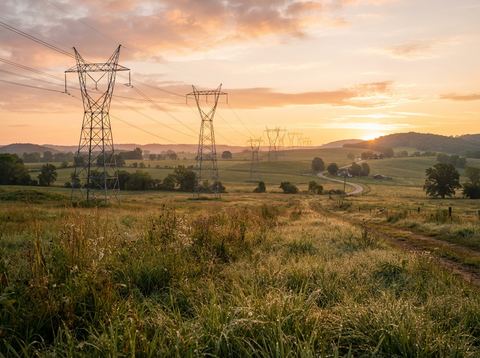


A look at eight verified American utility companies — from electric and gas providers to midstream infrastructure firms — and why domestic buyers track them.
Powering the Everyday
Flip a switch, turn a stove dial, or plug in an electric vehicle, and there's a company behind that quiet reliability. The American utilities sector is built on infrastructure most people never see — wires, pipelines, compressor stations, and power plants that have to work every hour of every day. This overview looks at eight verified companies from the directory that operate across electric, natural gas, and midstream segments of that system.
What Utilities Actually Do
Utilities generate or move essential energy — electricity and natural gas — to homes, factories, and businesses. Some own the wires and meters that reach a customer's house. Others own the pipelines, storage, and compression equipment that move gas or oil from the wellhead to market. Together, they form the backbone that other American industries depend on.
Electric Utilities Across the Map
Several companies in the directory generate or deliver electricity to specific regions of the country. AES Corp, based in Arlington, Virginia, trades on the NYSE under AES. Alliant Energy Corp, headquartered in Madison, Wisconsin, trades on the NASDAQ under LNT.

Midwest Anchors
Ameren Corp, based in St. Louis, Missouri, trades on the NYSE under AEE. Alongside Alliant Energy, it represents the Midwest's cluster of regional electric providers listed in the directory.
Rocky Mountain Reach
Black Hills Corp /SD/ is based in Rapid City, South Dakota, and trades on the NYSE under BKH. Its Rapid City headquarters places it among the directory's more geographically distinct utility listings, serving communities away from the coasts.
Natural Gas Keeps Flowing
Not every utility in the directory is about electricity. Atmos Energy Corp, based in Dallas, Texas, trades on the NYSE under ATO and represents the natural gas distribution side of the sector — the companies that get gas from a larger pipeline network into a customer's furnace or stove.
The Midstream Backbone
Before gas or oil ever reaches a distribution utility, it has to travel through gathering lines, processing plants, and compressor stations. That's the midstream segment, and it's well represented in this list.
Compression and Gathering
Antero Midstream Corp, based in Denver, Colorado, trades on the NYSE under AM. Archrock, Inc., headquartered in Houston, Texas, trades on the NYSE under AROC. Both companies focus on the equipment and infrastructure that move raw natural gas toward market rather than selling directly to households.
Infrastructure at Scale
Brookfield Infrastructure Corp, based in New York, New York, trades on the NYSE under BIPC. Its presence in the directory reflects how infrastructure ownership has broadened beyond traditional regional utilities into diversified infrastructure holding companies.
Why Domestic Buyers Pay Attention
Utilities are unusually visible to the communities they serve. Rates, service reliability, and where a company is headquartered all matter to the businesses and households that depend on them daily. For buyers and researchers, knowing whether a company is a regional electric provider, a gas distributor, or a midstream infrastructure operator shapes how its role in the broader energy chain gets understood.
What to Check Before You Choose
Because utilities and infrastructure companies vary so much in what they actually do — generate power, deliver gas, or move it through pipelines — it pays to look past the ticker symbol. The directory's independent verification of headquarters location and exchange listing gives a starting point for comparing companies like these on origin and structure before digging further into service territory or ownership.