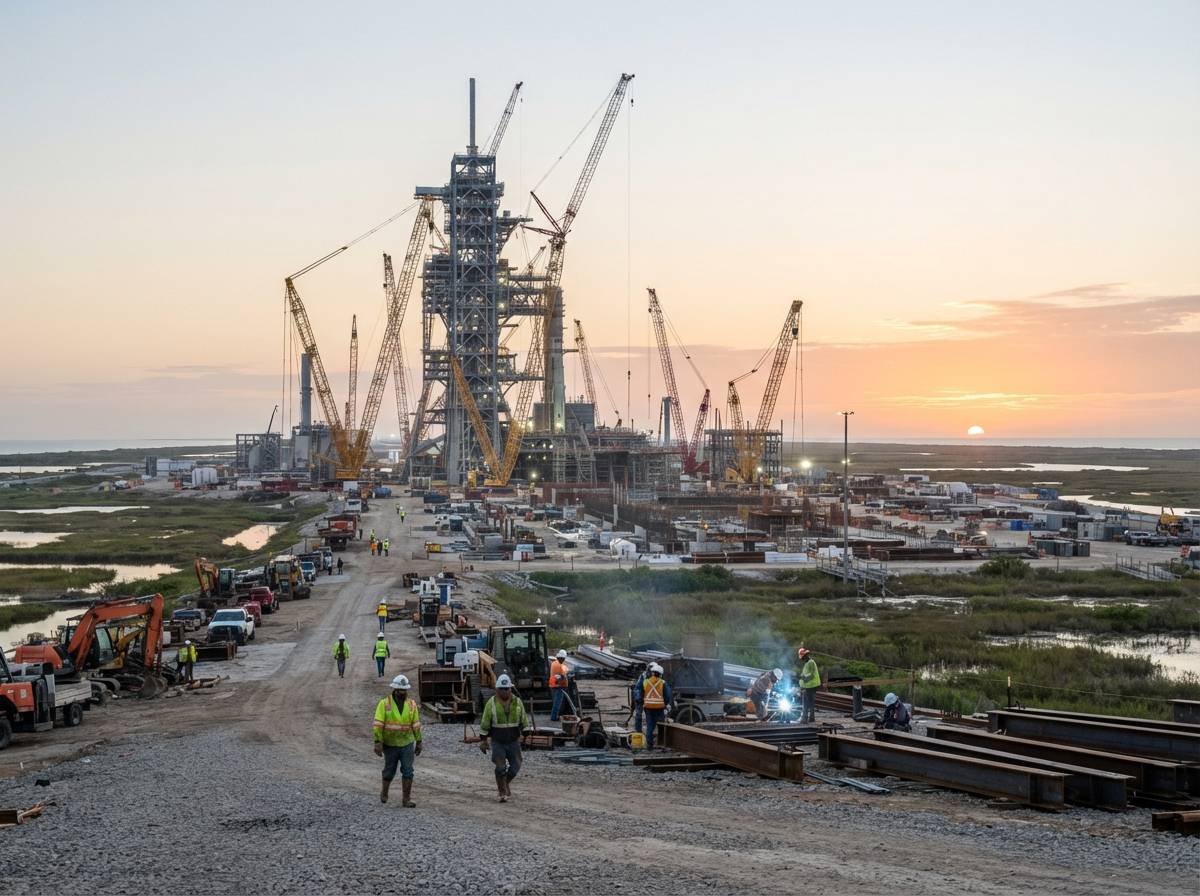

The bond market is sending a message about SpaceX's $25 billion debt offering as all five tranches slide below issue price after its record IPO.
The bond market is sending a message about SpaceX that few investors seem to be hearing, and it has nothing to do with rocket launches or satellite counts. Since Elon Musk's Space Exploration Technologies (NASDAQ: SPCX) went public on June 12 with an $85.7 billion initial public offering, attention has fixed almost entirely on the stock. Meanwhile, the company's newly issued corporate bonds have been quietly losing value, session after session.
Key Takeaways
- SpaceX's IPO raised $85.7 billion including the underwriters' overallotment, nearly tripling Saudi Aramco's 2019 raise.
- Less than two weeks after listing, SpaceX borrowed $25 billion through a five tranche bond offering with coupons from 5.35% to 6.65 percent.
- All five tranches, maturing between 2031 and 2056, are now trading below their issue price.
- The 2056 bond fell from an issue price of 99.45 cents to 94.52 cents on the dollar as of July 7.
- SpaceX still owes $20 billion on a bridge loan, and its AI venture xAI continues to burn cash.
What the Falling Bond Prices Actually Show
Corporate bonds typically start trading close to par, or $1.00 on the dollar, when they hit the market. SpaceX's $3.5 billion tranche of 2056 notes came in at 99.45 cents. By July 7, less than a month later, that price had slid to 94.52 cents. When a bond's price drops, its effective yield rises, and that is exactly what has happened here. Investors are demanding more compensation to hold SpaceX debt than they were willing to accept just weeks ago.
That matters because bond investors tend to be a colder, more analytical crowd than stock buyers. There is no story to fall in love with in a coupon payment. A 6.65% coupon on paper for notes maturing in 2056 is not unusual for a long dated loan, since lenders expect more return for tying up money for decades. But when the price keeps sinking after issuance across all five tranches, spanning maturities from 2031 through 2056, it signals that the market's early read on SpaceX's creditworthiness may have been too generous.
Why the Debt Load Deserves Scrutiny
SpaceX raised the $25 billion in fresh debt specifically to help fund AI infrastructure, expand the Starlink satellite broadband network, and push forward other space technology projects. Those are expensive, capital hungry ambitions. Layered on top of that spending is a $20 billion bridge loan still sitting on the books, plus ongoing losses at xAI, the artificial intelligence venture Musk also controls. None of that is disqualifying on its own, but together it paints a picture of a company leaning heavily on borrowed money while its most experimental unit continues to lose cash.
SpaceX Versus the IPO Comparison That Keeps Coming Up
The natural comparison point is Saudi Aramco's December 2019 IPO, the previous record holder that SpaceX's raise nearly tripled. But Aramco was a mature, cash generating oil producer with decades of predictable output behind it. SpaceX is a roughly $2 trillion company built on two of the more speculative growth stories on Wall Street right now, artificial intelligence and the commercial space economy, riding on Musk's track record rather than a long history of steady profits. Stock investors have rewarded that story with an enormous valuation. Bond investors, who get paid a fixed return regardless of how exciting the mission is, appear less convinced.
Who Should Be Watching This Closely
Existing SpaceX shareholders and anyone considering the stock have reason to pay attention to what is happening in the debt market, since bond pricing often reacts to credit risk before equity prices catch up. Fixed income investors already holding these notes, or weighing whether to buy them, are the ones most directly exposed if the yield keeps climbing. Casual observers of the space and AI sectors may simply find it a useful case study in how two markets can send very different signals about the same company at the same time.
Is the Debt Market Right About SpaceX?
Nobody has an answer yet, since these bonds have only traded for a few weeks. But the pattern is consistent: every one of SpaceX's five debt tranches sits below its issue price, and the longest dated notes have moved the most. Whether that reflects a temporary shakeout in a newly traded security or a genuine early warning about SpaceX's ability to service $25 billion in fresh debt alongside its existing bridge loan is the question that will decide whether this becomes a footnote or a turning point.
Frequently Asked Questions
Is the bond market safe?
Bonds are generally considered lower risk than stocks because they pay fixed interest and return principal at maturity, but they still carry credit risk, meaning the issuer could fail to repay, and price risk if sold before maturity.
How does the bond market work?
Companies and governments borrow money by issuing bonds to investors, who receive regular coupon payments plus repayment of the principal at maturity; bond prices then move up or down in secondary trading based on interest rates and perceived credit risk.
Why is the bond market so bad?
Bond prices fall when investors demand higher yields to compensate for rising risk or rising interest rates elsewhere; in SpaceX's case, its notes have dropped because investors appear less confident about the company's ability to manage its debt load.
What is the bond market saying?
In SpaceX's case, the bond market is saying investors want more compensation for the risk of holding its debt, since all five of its new bond tranches are trading below the price they were issued at.
What does the bond market tell us?
Bond prices and yields often reflect investor sentiment about a company's credit health, sometimes flagging concerns before those worries show up in the stock price.