Oil prices rise past $70 a barrel after tanker attacks near the Strait of Hormuz spark fears over global crude supply and shipping routes.
Oil prices rise sharply whenever traders sense danger in the world's busiest energy corridors, and Tuesday delivered exactly that kind of scare. U.S. crude climbed more than 3% to top $70 a barrel for the first time since July 1, while international Brent crude also gained 3%, pushing past $74, after reports that ships transiting the Strait of Hormuz had been struck by projectiles.
In Brief
- U.S. crude oil rose above $70 per barrel, its highest level since July 1
- Brent crude climbed past $74 per barrel, also up roughly 3%
- UK maritime authorities reported attacks on three vessels near the Strait of Hormuz
- A U.S. official said Iran's Revolutionary Guard fired missiles and drones at the ships
- Treasury yields rose alongside oil, with the 20 year yield (tracked by TLT) pushing above 5%
What Happened in the Strait of Hormuz
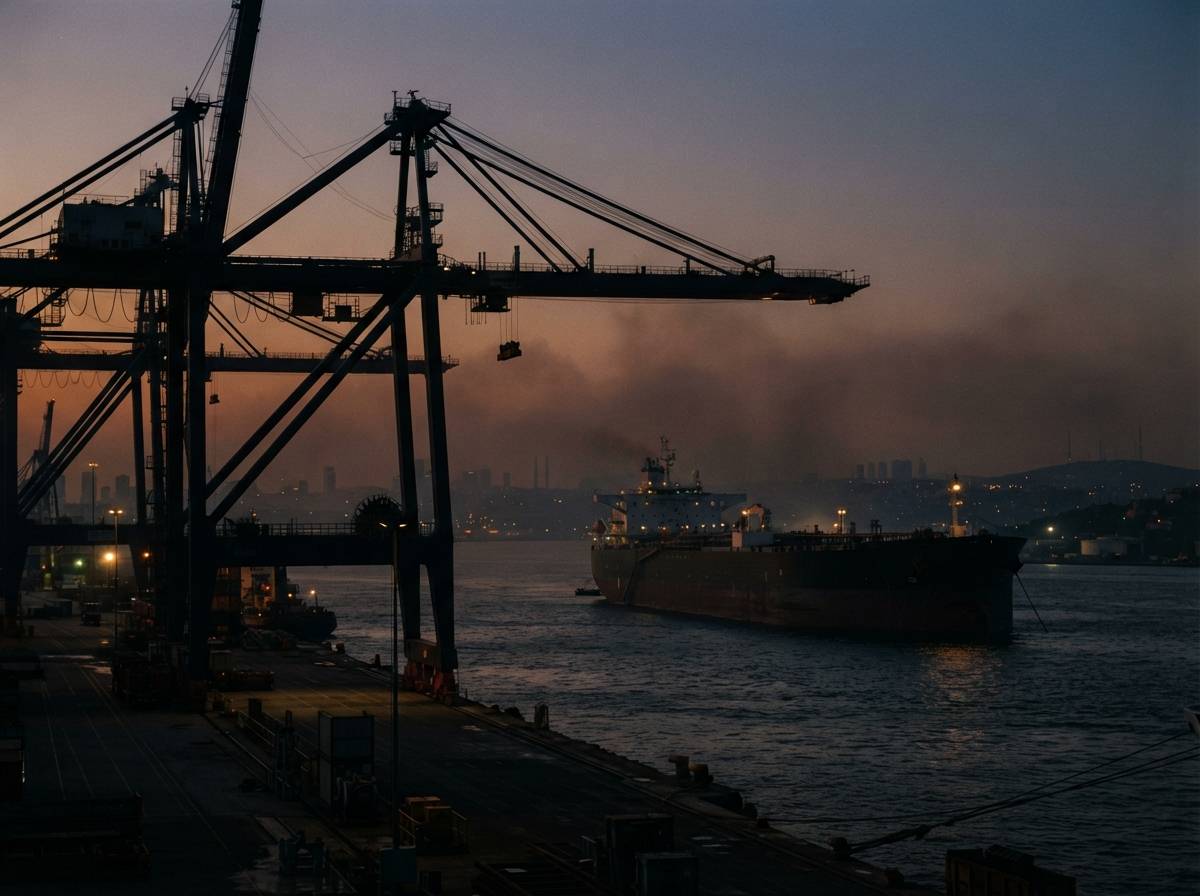
The UK's Maritime Trade Operations center said early Tuesday that it had logged two separate attacks on ships moving through the Strait of Hormuz, one of the world's most critical oil shipping lanes. One vessel was hit by an uncrewed aerial vehicle, the agency said, while a second suffered what it described as likely structural damage from an unidentified projectile. A third ship off the coast of Oman caught fire after a separate strike.
A U.S. official told NBC News that Iran's Islamic Revolutionary Guard Corps fired missiles at two of the vessels and hit a third commercial ship with at least one drone. The U.S. military shot down additional drones launched by Iran, according to the same official. Reuters reported that one of the vessels, identified as the liquefied natural gas tanker Al Rekayyat, faced a risk of exploding because of a fire in its engine room, though that account had not been independently verified by NBC News.
Why Fuel and Oil Prices Rise on Geopolitical Shocks
The Strait of Hormuz carries a huge share of the world's seaborne crude, so any hint of military conflict there tends to send oil prices rise instantly as traders price in the risk of disrupted tanker traffic. Roughly a fifth of global oil consumption passes through that narrow waterway, which makes it one of the few chokepoints capable of moving markets on headlines alone, before a single barrel of supply is actually lost.
Treasury markets moved in sympathy with crude. Yields on 20 and 30 year government bonds broke above 5%, and the 10 year yield, which weighs more heavily on consumer borrowing costs, hit its highest mark since early June. Higher energy prices often stoke inflation worries, and that combination tends to push bond yields upward as investors demand more compensation for holding longer dated debt.
Stocks Wobble as Chip Selloff Compounds the Selloff
Equity markets initially flinched on the tanker news. The S&P 500, tracked by the SPY ETF, fell nearly 1% before clawing back most of the loss to trade down just 0.3% by early afternoon. The Nasdaq 100, tracked by QQQ, fared worse, sliding as much as 2%, though the damage there had less to do with oil and more to do with a separate shock out of Asia.
Samsung shares plunged 7% overnight after the company posted earnings that beat expectations but by a narrower margin than some investors wanted. Deutsche Bank's Jim Reid noted the results came in just 6% ahead of estimates, a gap that was apparently enough to trigger heavy profit taking. South Korea's Kospi Index briefly dipped into bear market territory, down more than 20% from its recent peak, as other chip names such as SK Hynix also fell.
Reuters also reported that China's DeepSeek is developing its own AI chip, a move that could eventually reduce the company's dependence on American chipmakers. By 1 p.m. ET, nine of the ten worst performing Nasdaq stocks were memory or chip companies, with Intel and Sandisk each down about 9%. SpaceX shares slipped 5% even as the company made its debut in the Nasdaq 100, an index of the exchange's largest non-financial firms that typically draws heavy buying from index funds when a new member joins.
Frequently Asked Questions
Why oil prices up?
Oil prices climbed after reports that ships were attacked while transiting the Strait of Hormuz, a key route for global crude shipments, raising fears that supply could be disrupted.
Why oil prices rise?
Prices rise when traders worry that geopolitical conflict, like the reported strikes on tankers near Iran, could interrupt the flow of oil through vital shipping chokepoints.
Why gas prices rise?
Gasoline prices track crude oil costs closely, so when crude jumps on supply fears, the cost to refine and distribute fuel typically follows within days or weeks.
Why fuel prices rise?
Fuel prices rise for the same reasons crude does: any real or perceived threat to production, refining or shipping routes adds a risk premium that gets passed along the supply chain.
Why oil prices surge?
Sharp surges usually happen when a specific, dramatic event, such as attacks on tankers or military action near a major chokepoint like the Strait of Hormuz, hits markets suddenly and forces rapid repricing of supply risk.