SK Hynix will invest $51.46 billion in a new NAND fab by 2029 to meet AI demand. Here's what it means for valuation and the stock.
SK Hynix, the South Korean chipmaker that ranks among the world's largest producers of memory chips, said this week it will spend 80 trillion won (about $51.46 billion) to build a new NAND flash memory factory as demand tied to artificial intelligence infrastructure continues to outpace supply.
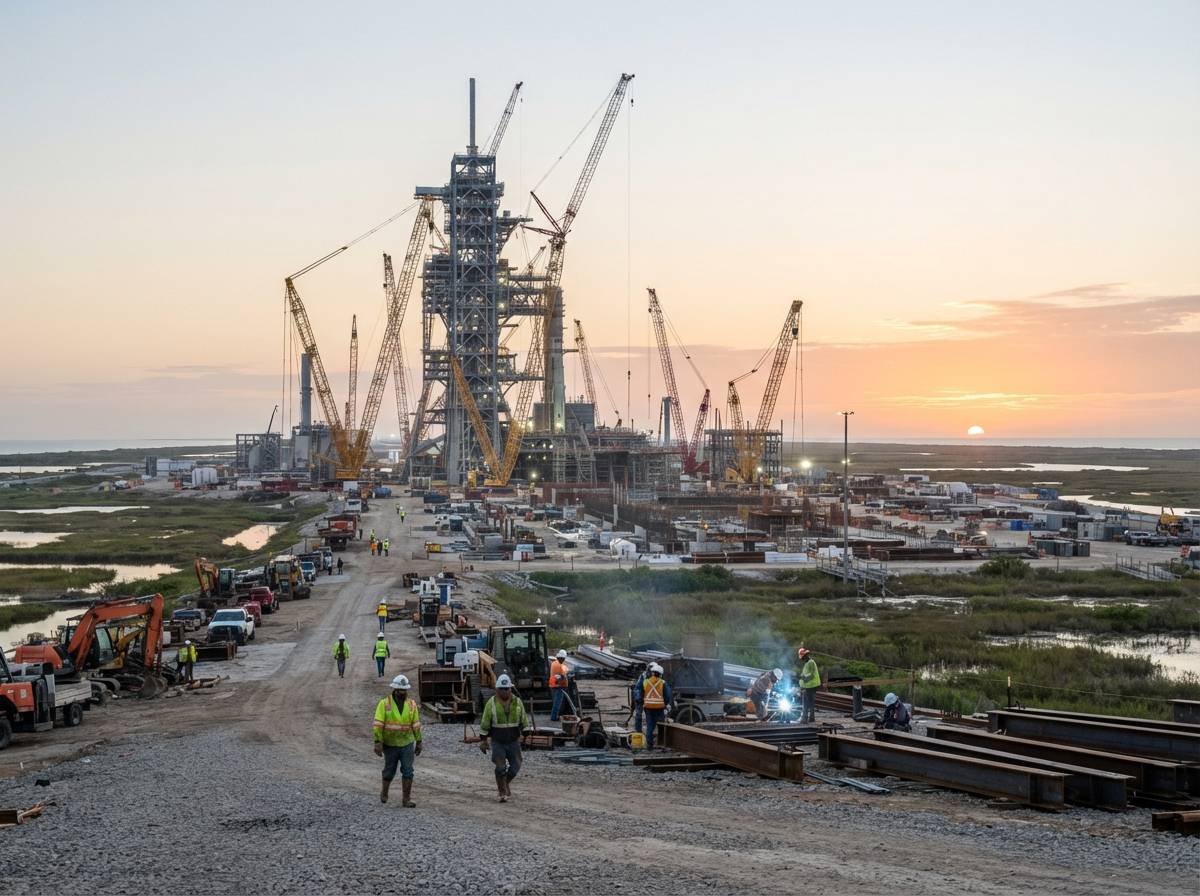
The company laid out the plan at an event in Cheongju attended by CEO Kwak Noh-jung and South Korean President Lee Jae Myung. Construction on the new facility, named M17, is set to begin next year, with production aimed at closing a NAND shortage that has emerged as AI servers and data centers consume ever larger volumes of memory. SK Hynix also said it will commit an additional 20 trillion won to a chip packaging plant in the same city, targeted for completion by late 2027.
What SK Hynix's Cheongju Investment Signals for Memory Demand
The scale of the announcement, roughly 100 trillion won combined for both projects, underscores how central memory chips have become to the AI buildout. NAND flash, used for data storage in everything from smartphones to enterprise servers, has seen tightening supply as AI workloads demand more capacity for training data and model storage. SK Hynix's decision to build a dedicated new fab rather than simply expand existing lines suggests the company expects this demand to persist well beyond the current cycle.
Valuation, Momentum and Yield at SK Hynix
Shares of SK Hynix trade on the Korea Exchange, where the stock has been a standout performer amid the AI hardware rally that has lifted memory makers broadly. The company's market capitalization places it among the largest listed firms in South Korea, and its earnings have benefited from a rebound in memory chip pricing after a prolonged downturn in 2022 and 2023.
Investors weighing the stock now face a familiar setup in cyclical semiconductor names: strong near term earnings momentum set against the risk of oversupply once new capacity, including this very fab, comes online later in the decade. The bull case rests on AI server buildouts continuing to absorb high bandwidth memory and NAND at a pace that outstrips new supply through at least 2029, when M17 is expected to be complete. The bear case centers on timing risk: a 80 trillion won facility takes years to build, and memory markets have a long history of swinging from shortage to glut once multiple producers add capacity simultaneously.
Dividend payouts and price to earnings multiples for memory chip makers also tend to swing with the cycle, since earnings per share can move sharply between boom and bust years. That volatility is part of why momentum indicators like the relative strength index carry weight for traders watching SK Hynix, even as long term investors focus more on where AI infrastructure spending heads over the next several years.
Government Backing Adds Another Layer
President Lee's attendance at Thursday's announcement signals the South Korean government's interest in keeping domestic chipmakers competitive against rivals in the United States, Taiwan and China. State support, whether through infrastructure, tax incentives or regulatory speed, has become a recurring feature of major fab announcements across the industry, and SK Hynix's Cheongju expansion fits that pattern.
Can Supply Catch Up With AI Driven Demand by 2029?
The real test for SK Hynix's bet will play out over the next several years, as M17 construction proceeds alongside the company's existing high bandwidth memory production. Whether AI demand growth sustains through the back half of this decade, or whether a supply response from SK Hynix and its rivals eventually cools pricing, remains the open question hanging over the stock.