
IQM stock (IQMX) debuted flat after its SPAC merger. See what its $1.9B valuation, growing client list, and quantum advantage risk mean for investors.
IQM Quantum Computers, a Finnish maker of physical quantum computers and cloud based quantum services, began trading on the Nasdaq under the ticker IQMX after completing a SPAC merger that valued the company near $1.9 billion. Shares spent most of Thursday's session below the IPO price, a soft debut for a company whose own prospectus warns that widespread commercial use of quantum computing might never materialize.
A Debut That Underwhelmed
The muted reaction wasn't entirely a surprise. SPAC mergers have struggled to generate enthusiasm from retail investors in recent years, and IQM's candid disclosure about the uncertain path to commercial scale gave traders another reason for caution. That line, buried in the filing, applies to the entire quantum sector, not just IQM, but it landed at a moment when investors are already sorting hype from substance in emerging tech names.
Customers Are Growing, Even Without Quantum Advantage
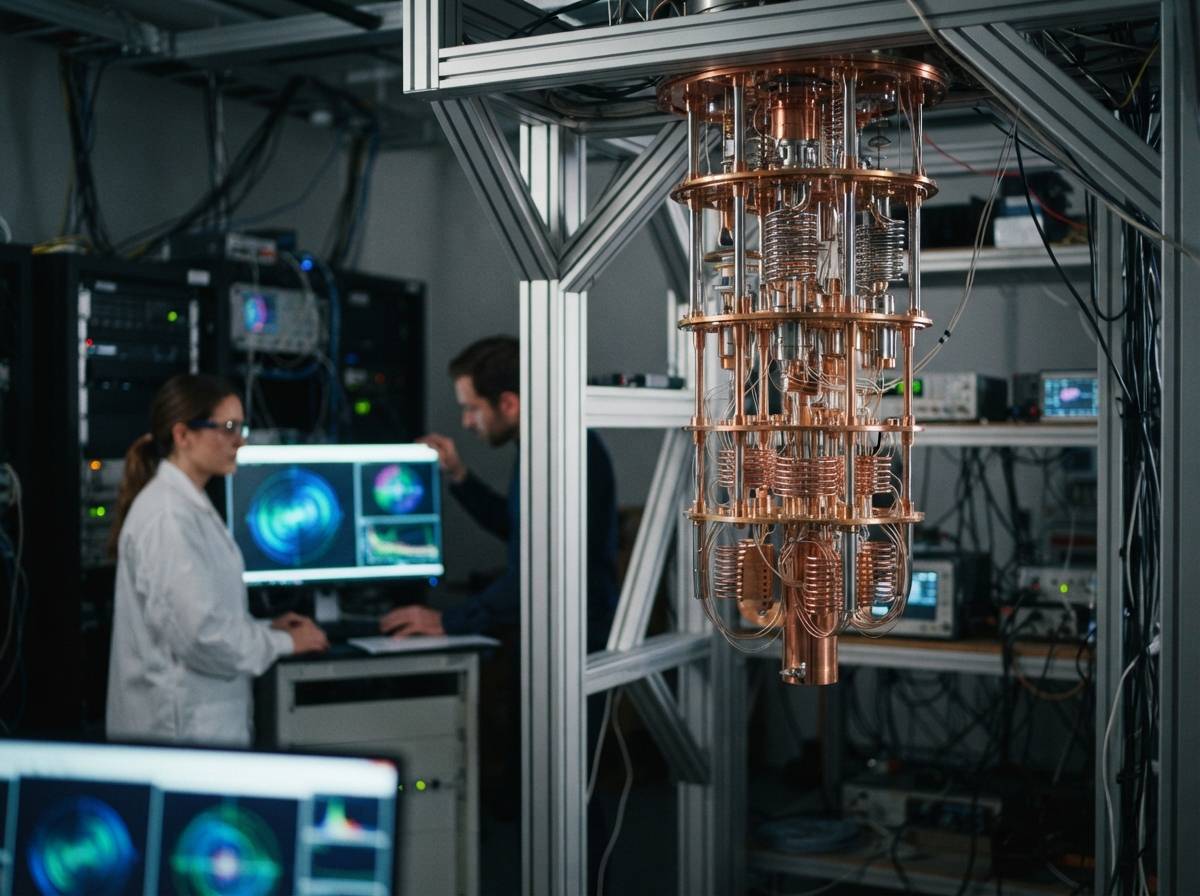
IQM's business today rests on selling physical quantum machines to research institutions and offering computing time through the cloud. Clients include VTT Technical Research Centre of Finland and Germany's Leibniz Supercomputing Centre. CEO and cofounder Jan Goetz described the model simply: the company sells computers into supercomputing and data centers while also renting out processing time remotely.
The customer count climbed from 8 in 2024 to 22 in 2025, including its first private sector clients. That trajectory gives IQM a case for momentum, but it also underscores how far the industry remains from what researchers call quantum advantage, the point where quantum chips reliably beat classical computers across a broad set of complex tasks. Applications tied to biotech, fintech and cryptography hinge on that threshold, and nobody, including IQM itself, has offered a firm date for when it might arrive.
Valuation, Momentum and the Quantum Advantage Question
Because IQMX just began trading, familiar metrics like price to earnings ratio, earnings per share, 52 week range, relative strength index and dividend yield are not yet established or meaningful, a common situation for a freshly listed SPAC merger. The $1.9 billion valuation itself is the main data point available, and it will likely serve as the benchmark against which future price moves get judged. Bulls point to government backing as a tailwind: President Trump's executive orders aimed at accelerating quantum timelines have pushed the Department of Energy to commit to deploying what it calls the world's first fault tolerant, scientifically relevant quantum computer by 2028. IQM already operates a quantum tech center in Maryland and has a computer installed at Oak Ridge National Laboratory, a DOE facility, positioning it to benefit directly from federal spending. The bear case is straightforward: revenue still depends on a small, if growing, customer base, and the company's own prospectus concedes large scale commercial traction may never come. Similar national pushes are underway in France, Germany and the United Kingdom, meaning competition for funding and talent is intensifying globally, not just domestically.
Two Listings, One Company
IQM isn't abandoning its European roots despite the Nasdaq listing. It is set to debut on Nasdaq Helsinki as well, keeping ties to backers like Tesi, Finland's sovereign wealth fund, while running its IQMX ticker in the United States alongside most of its publicly traded quantum peers.
Will Quantum Advantage Ever Arrive
IQM's dual listing and growing client roster show a company betting on patience as much as technology. Whether government money and expanding lab partnerships translate into the kind of computing breakthrough that justifies a $1.9 billion valuation remains an open question that even the company admits it cannot answer.