Oil prices jump on renewed US Iran hostilities as Iran strikes ships near the Strait of Hormuz, pushing Brent and WTI crude up roughly 5%.
Oil prices jumped on renewed US Iran hostilities Tuesday after Iranian forces struck three vessels near the Strait of Hormuz, reviving fears that the narrow waterway carrying a fifth of the world's seaborne oil could again become a war zone. Brent crude futures climbed roughly 5% to trade above $75.50 a barrel, while US benchmark WTI crude rose a similar amount to reach $72.
The attacks came just weeks after Washington and Tehran signed a memorandum of understanding meant to end hostilities between the two countries. That truce now looks shakier than at any point since it was reached, and traders responded by pricing in fresh supply risk from one of the world's most important oil chokepoints.
At a Glance
- Brent crude rose about 5% to above $75.50 per barrel
- WTI crude climbed a similar 5% to reach $72
- Three ships, including a Qatari LNG carrier and a Saudi oil tanker, were struck near the Strait of Hormuz
- The US Treasury revoked a license that had allowed Iran to sell sanctioned crude on global markets
- Qatar summoned Iran's deputy ambassador over the attacks
What Triggered the Latest Strikes
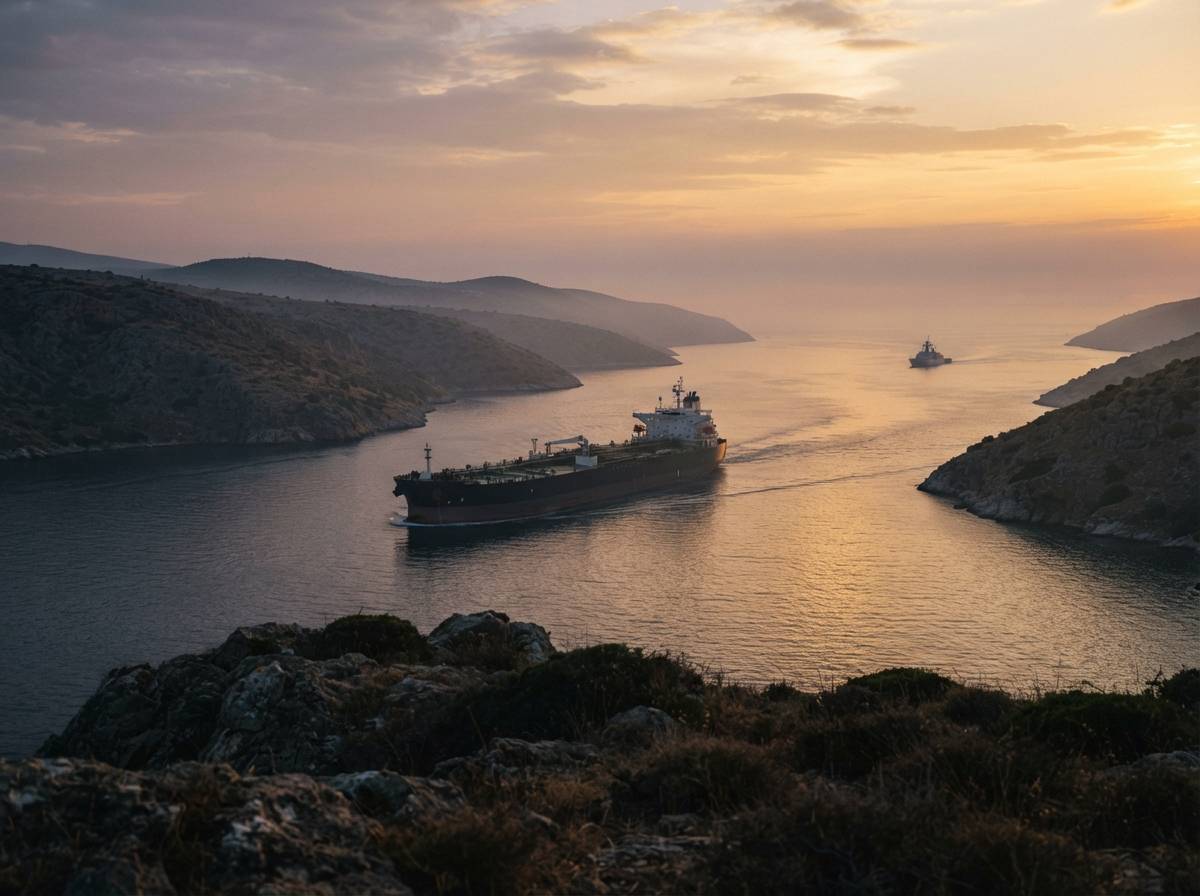
According to alerts from the UK maritime network and statements from affected governments, three separate vessels were hit by projectiles from Iran within a 24 hour window. All three were traveling in or near the Strait of Hormuz, the chokepoint between Iran and Oman that ships use to move oil and gas out of the Persian Gulf. Ship tracking data cited by the vessel monitoring platform Windward showed other vessels that had been using a southern route along the Omani coast diverting toward Iranian waters instead, apparently trying to avoid drones operating near the strait.
Iran has not claimed responsibility for the strikes. But the pattern echoes an earlier round of attacks that occurred before the memorandum of understanding was signed, when US forces responded with airstrikes inside Iran ahead of a ceasefire.
Washington's Response and the Sanctions Snapback
The US Treasury Department moved quickly, revoking a license issued by the Office of Foreign Asset Control that had permitted Iran to sell previously sanctioned crude on the open market. That license had underpinned a central piece of the recent agreement between the two countries, and its removal signals how seriously the White House is treating the strikes.
US officials told Reuters that negotiations with Iran are continuing despite the violence, but the White House has repeatedly said any sanctions relief depends on Iran honoring its commitments, chief among them free and safe transit through the strait. Gregory Brew, a senior analyst at Eurasia Group focused on Iran and oil, said Tehran likely lacks the reach to impose real control over shipping lanes but that sporadic strikes still create enough uncertainty to preserve leverage.